If you live with endometriosis, you may already know how exhausting the pain can be. When you also want to start a family, it is natural to worry about whether endometriosis will make pregnancy harder. Many women face years of painful periods before receiving a diagnosis, and questions about fertility often come soon after.
The reassuring news is that many women with endometriosis do conceive, some naturally and some with treatment. This guide explains what endometriosis is, how it can affect fertility, how it is diagnosed and the treatment options available. The right path always depends on your individual evaluation, including your symptoms, age, egg reserve and your partner’s fertility.
Key takeaways: Endometriosis is a common condition in which tissue similar to the uterine lining grows outside the uterus. It can affect fertility through adhesions, damage to the tubes and ovaries, and inflammation. Many women with endometriosis still conceive. Treatment options include monitored natural conception, surgery, IUI and IVF, chosen according to your situation.
What Is Endometriosis?
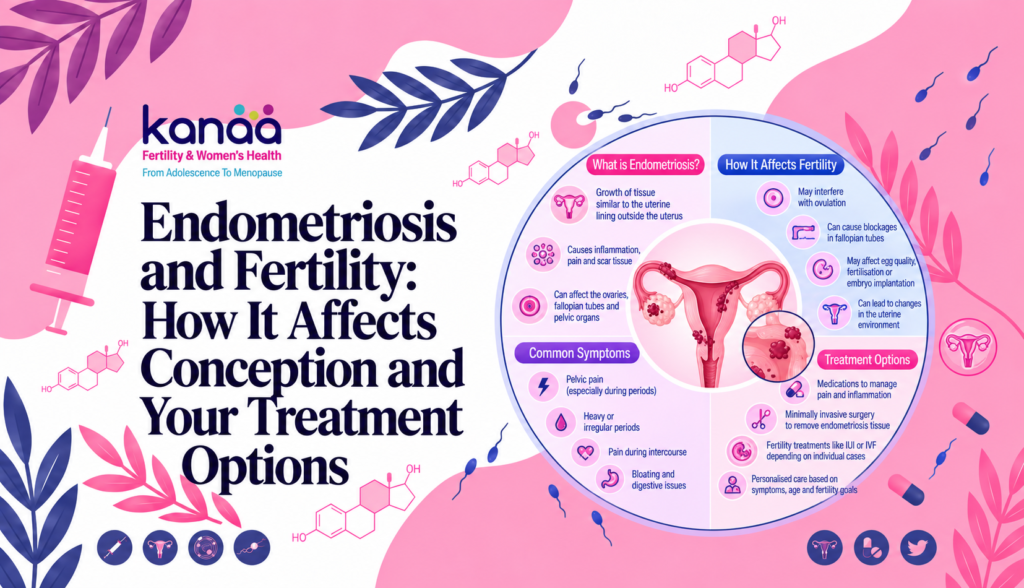
Endometriosis is a long-term condition in which tissue similar to the lining of the uterus grows outside the uterus, most often on the ovaries, fallopian tubes and the lining of the pelvis. This tissue responds to monthly hormones, causing inflammation, pain and sometimes scar tissue.
The World Health Organization estimates that endometriosis affects around 10% of women and girls of reproductive age worldwide. It is not an infection, and it is not caused by anything you did.
Common Symptoms of Endometriosis
The symptoms of endometriosis vary widely. Some women have severe pain, while others have no symptoms and find out only during fertility tests. Common symptoms include:
- Painful periods that disrupt daily life, often worsening over time
- Pain during or after intercourse
- Chronic pelvic pain outside periods
- Pain with bowel movements or passing urine, especially during periods
- Heavy or irregular bleeding in some women
- Tiredness and low energy
- Difficulty conceiving
The severity of pain does not always match how much endometriosis is present. A woman with mild disease can have severe pain, and a woman with extensive disease can have very little.
How Endometriosis Can Affect Fertility
Endometriosis can affect fertility in several ways: by distorting the pelvic anatomy and tubes, by affecting the ovaries and egg reserve, and through inflammation that may affect the egg, sperm and implantation. Not every woman with endometriosis has these effects.
Effects on the tubes and pelvic anatomy
Endometriosis can cause adhesions, bands of scar tissue that stick organs together. Adhesions around the tubes and ovaries can stop the tube from picking up the egg after ovulation, or block the tube itself. Read more about blocked fallopian tubes and how they are treated.
Endometriomas and ovarian reserve
An endometrioma, often called a chocolate cyst, is a cyst on the ovary filled with old blood. Endometriomas can affect the healthy ovarian tissue around them. Surgery to remove them can also reduce the number of eggs remaining, especially if it is repeated. This is why doctors often check ovarian reserve with an AMH blood test and an ultrasound before deciding on surgery. Learn what your AMH level means.
Inflammation and implantation
Endometriosis creates an inflammatory environment in the pelvis. Researchers believe this may affect egg quality, sperm function, fertilisation and the early stages of implantation. How much this matters varies between women, and research in this area is ongoing.
How Endometriosis Is Diagnosed
Endometriosis is diagnosed using your symptoms and history, a pelvic examination, imaging such as ultrasound or MRI, and sometimes laparoscopy. Ultrasound can often detect endometriomas and some deep endometriosis, while laparoscopy allows doctors to see and treat endometriosis directly.
History and examination
Your doctor will ask about your periods, pain, bowel and bladder symptoms, and how long you have been trying to conceive. A pelvic examination may reveal tenderness or nodules that suggest endometriosis.
Ultrasound and MRI
A transvaginal ultrasound is often the first imaging test. It can show endometriomas on the ovaries and, in experienced hands, some deep endometriosis. MRI may be used in more complex cases, for example when the bowel or bladder may be involved. A normal scan does not rule out endometriosis, because small patches on the pelvic lining may not be visible.
Laparoscopy
Laparoscopy is keyhole surgery under general anaesthesia, in which a small camera is used to look inside the pelvis. It allows the surgeon to see endometriosis directly, take a sample if needed, and often treat it during the same procedure. Current guidance increasingly relies on imaging first and reserves laparoscopy for when it is likely to help. Read more about the laparoscopy procedure and its benefits and the difference between hysteroscopy and laparoscopy.
Stages of Endometriosis and What They Mean for Fertility
Endometriosis is often described in four stages, based on what the surgeon sees during laparoscopy. Stage describes the amount and location of disease. It does not reliably predict pain, and it is only one part of the fertility picture.
| Stage | Typical findings | What it may mean for fertility |
|---|---|---|
| Stage I (minimal) | Small, superficial patches, few or no adhesions | Natural conception is often possible; other factors guide the plan |
| Stage II (mild) | More patches, slightly deeper | Often similar to Stage I, depending on age and other factors |
| Stage III (moderate) | Deeper patches, small endometriomas, some adhesions | Tubes and ovaries may be affected; treatment is more often needed |
| Stage IV (severe) | Large endometriomas, dense adhesions | Higher chance that IVF is recommended |
Can You Get Pregnant With Endometriosis?
Yes, many women with endometriosis get pregnant, some naturally and others with fertility treatment. Your chances depend on the extent of endometriosis, whether the tubes and ovaries are affected, your age, your egg reserve and your partner’s fertility, not on the diagnosis alone.
Women with mild endometriosis, open tubes and a normal egg reserve may conceive naturally. When endometriosis is more extensive, or when there are other factors such as age or male factor infertility, treatment is more likely to be recommended.
Fertility Treatment Options for Endometriosis
Fertility treatment for endometriosis may include trying naturally with monitoring, laparoscopic surgery, IUI with ovarian stimulation, or IVF. Hormonal medicines that suppress endometriosis help with pain but stop ovulation, so they are not used while you are trying to conceive.
Trying naturally with monitoring
For younger women with mild endometriosis, open tubes and a normal semen analysis, doctors may suggest trying naturally for a period, with advice on timing and regular review.
Surgery
Laparoscopic surgery can remove or destroy patches of endometriosis and separate adhesions. For some women with mild to moderate disease, surgery may improve the chance of natural conception. For endometriomas, surgery is weighed carefully against the risk of reducing egg reserve.
IUI with ovarian stimulation
In intrauterine insemination (IUI), prepared sperm are placed directly into the uterus around ovulation, often with medicines to support ovulation. IUI may be considered for mild endometriosis when at least one tube is open. Learn more about IUI treatment.
IVF
In IVF, eggs are collected, fertilised in the lab and the embryo is placed in the uterus. IVF bypasses the tubes and many of the pelvic effects of endometriosis. It is often recommended for moderate to severe endometriosis, blocked tubes, reduced egg reserve, older age, or after other treatments have not worked. Learn more about IVF treatment in Chennai.
| Option | When it may be considered | Considerations |
|---|---|---|
| Monitored natural conception | Mild disease, younger age, open tubes, normal semen analysis | Time-limited, with regular review |
| Laparoscopic surgery | Pain, mild to moderate disease, adhesions | Recovery time; endometrioma surgery may reduce egg reserve |
| IUI with ovarian stimulation | Mild disease with at least one open tube | Several cycles may be needed |
| IVF | Moderate to severe disease, blocked tubes, low reserve, older age | More intensive; results depend on age and egg reserve |
Surgery or IVF First?
There is no single answer to whether surgery or IVF should come first. Doctors weigh several factors:
- Your pain: if pain is severe, surgery may help your quality of life as well as fertility
- Your age: time matters more as egg numbers fall, which can favour moving to IVF sooner
- Your egg reserve (AMH): if reserve is already low, doctors are more cautious about ovarian surgery
- Endometrioma size and appearance: some cysts may need removal; others can be left
- Previous surgery: repeated ovarian surgery can further reduce egg reserve
- Other factors: blocked tubes or male factor infertility may point towards IVF
In some cases, doctors discuss egg freezing before ovarian surgery, to preserve eggs. This is an individual decision to discuss with your specialist.
Endometriosis vs Adenomyosis
Endometriosis and adenomyosis are related but different conditions. In endometriosis, tissue similar to the uterine lining grows outside the uterus. In adenomyosis, it grows into the muscle wall of the uterus itself. Adenomyosis can cause heavy, painful periods and an enlarged uterus, and it is often seen on ultrasound or MRI. The two conditions can occur together, and both can affect fertility treatment planning.
Living With Endometriosis While Trying to Conceive
Trying to conceive with endometriosis can be physically and emotionally demanding. A few practical points can help:
- Pain relief: speak to your doctor about pain medicines that are safe while trying to conceive
- Timing: some couples find pain makes intercourse difficult; your doctor can advise on options, including IUI
- Healthy routine: regular activity, good sleep and a balanced diet support overall wellbeing, though no diet has been shown to cure endometriosis
- Emotional support: consider counselling or support groups, and talk openly with your partner
Seek prompt medical care for severe pelvic pain, fever or sudden worsening of symptoms.
Pregnancy After Endometriosis: What to Expect
Many women with endometriosis have healthy pregnancies. Some notice that their endometriosis pain improves during pregnancy, while others notice little change. Pregnancy does not cure endometriosis, and symptoms can return after birth or after breastfeeding ends.
Some studies suggest that women with endometriosis may have a slightly higher chance of certain pregnancy complications. This does not mean you will have them, but it is a good reason to tell your obstetrician about your endometriosis and attend all your antenatal appointments.
Questions to Ask Your Doctor About Endometriosis and Fertility
These questions can help you make the most of your consultation:
- Where is my endometriosis, and how extensive does it seem?
- Are my fallopian tubes open, and are my ovaries affected?
- What does my AMH level and ultrasound say about my egg reserve?
- Is surgery likely to help my chances, or could it reduce my egg reserve?
- How long is it reasonable for us to try naturally before treatment?
- Would IUI or IVF be more suitable for us, and why?
- What can I safely take for pain while trying to conceive?
- Has my partner had a semen analysis, and do the results change the plan?
Conclusion
Endometriosis is common, and while it can make conception harder for some women, many do become pregnant. Understanding how endometriosis affects your tubes, ovaries and egg reserve helps you and your doctor choose between monitored natural conception, surgery, IUI and IVF. If you also have PCOS or are unsure how it compares, read our guide to PCOS and fertility.
If you have endometriosis and want to plan a pregnancy, Kanaa Fertility’s specialists can review your reports and discuss the options suited to you. Book a consultation at our KK Nagar or Mylapore clinic in Chennai.
Frequently Asked Questions
Does endometriosis always cause infertility?
No. Many women with endometriosis conceive naturally. It can make conception harder for some, depending on where the endometriosis is and how extensive it is.
Does endometriosis affect egg quality?
Endometriosis, especially cysts on the ovary, can affect ovarian reserve, and inflammation may affect egg quality. Your doctor may check AMH and an ultrasound to assess this.
Should I have surgery before trying IVF?
It depends on your pain, age, egg reserve and cyst size. Surgery helps some women, but repeated ovarian surgery can reduce egg reserve, so the decision is individual.
Can endometriosis come back after surgery?
Yes, endometriosis can return after surgery. Your doctor will discuss how to plan pregnancy and ongoing care afterwards.
Is IVF successful for women with endometriosis?
IVF is a common option and helps many women with endometriosis conceive. Results depend on age, egg reserve and other factors, so outcomes vary from person to person.
Can painful periods be a sign of endometriosis?
Severe period pain that disrupts daily life can be a sign of endometriosis. It is worth discussing with a gynaecologist or fertility specialist.
Is endometriosis the same as adenomyosis?
No. Endometriosis grows outside the uterus, while adenomyosis grows within the muscle wall of the uterus. They can occur together.