
Quick Answer (AEO / Featured Snippet)
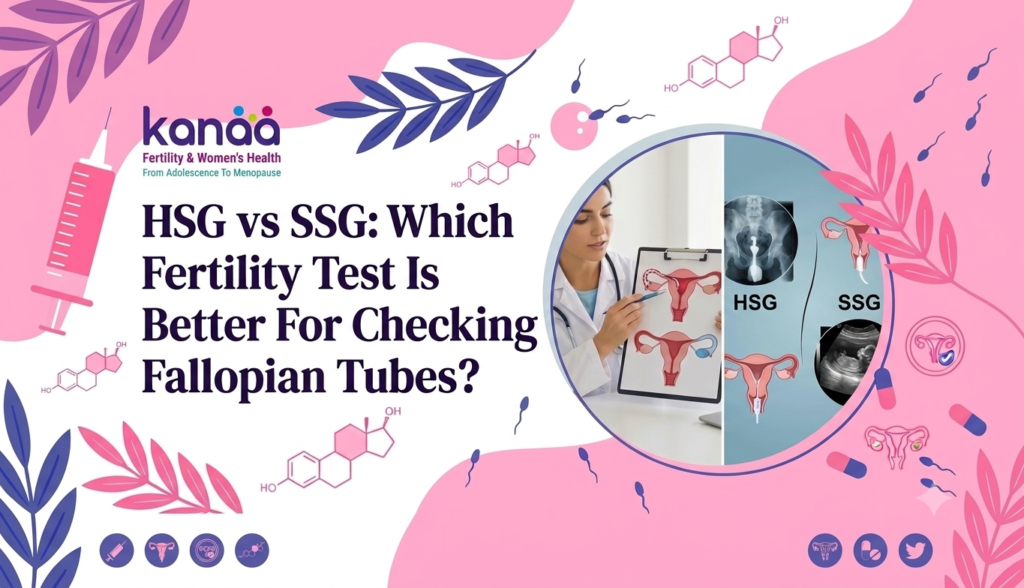
HSG and SSG are diagnostic fertility tests used to evaluate whether the fallopian tubes are open. HSG uses X-ray imaging with contrast dye, while SSG uses ultrasound with saline or contrast fluid. Both tests help doctors identify tubal blockage and guide fertility treatment decisions such as IUI or IVF.
Introduction
When couples face difficulty conceiving, one of the first questions fertility specialists ask is whether the fallopian tubes are open. The fallopian tubes play a critical role in natural conception because they allow sperm and egg to meet.
To evaluate the tubes, doctors commonly recommend either an HSG test or an SSG test. Many patients feel confused about the difference between these procedures and which one may be more suitable for their situation.
This guide explains how HSG and SSG tests work, what they evaluate, their differences, and how doctors choose the most appropriate test during fertility assessment.
Internal links: Fertility Test for Women, Fertility Test for Couples
Why Fallopian Tube Testing Is Important
Healthy fallopian tubes are essential for natural conception. If a tube is blocked, sperm may not reach the egg, preventing fertilization.
Testing the fallopian tubes helps doctors:
- Identify tubal blockages
- Detect structural abnormalities
- Evaluate uterine health
- Plan appropriate fertility treatment
Tubal testing is often recommended before treatments such as IUI or IVF.
What Is an HSG Test?
The HSG test (Hysterosalpingography) is an X-ray procedure used to examine the uterus and fallopian tubes.
During the test:
- A contrast dye is injected into the uterus
- X-ray images track the flow of the dye
- Doctors observe whether the dye passes through the fallopian tubes
If the dye flows freely into the abdominal cavity, the tubes are considered open.
Internal links: HSG Test
What Is an SSG Test?
The SSG test (Saline Sonosalpingography) uses ultrasound imaging instead of X-rays to evaluate the uterus and fallopian tubes.
During the procedure:
- Sterile saline or contrast fluid is injected into the uterus
- Ultrasound imaging tracks the movement of the fluid
- Doctors assess whether the tubes are open
SSG also helps evaluate the uterine cavity.
Internal links: SSG Test
Key Differences Between HSG and SSG
Both tests help doctors evaluate reproductive health but use different imaging techniques.
| Feature | HSG | SSG |
|---|---|---|
| Imaging method | X-ray | Ultrasound |
| Contrast medium | Radiographic dye | Saline or ultrasound contrast |
| Radiation exposure | Yes | No |
| Uterine evaluation | Limited | Better visualization |
| Diagnostic purpose | Tubal blockage detection | Tubal and uterine evaluation |
Which Test Is Better?
Neither test is universally better. The choice depends on several factors, including medical history, symptoms, and doctor preference.
HSG may be recommended when:
- Detailed evaluation of tubal blockage is required
- X-ray imaging is preferred for diagnosis
SSG may be recommended when:
- Ultrasound-based imaging is sufficient
- Radiation exposure should be avoided
- Doctors want better uterine cavity visualization
A fertility specialist determines which test is most appropriate.
When Are These Tests Recommended?
Doctors may recommend HSG or SSG when:
- Pregnancy has not occurred after trying for a year
- There is suspicion of tubal blockage
- Patients have a history of pelvic infections
- Doctors want to evaluate reproductive anatomy before treatment
Both tests are commonly performed during early fertility evaluation.
Do These Tests Improve Fertility?
In some cases, the contrast fluid used in these procedures may flush minor debris from the fallopian tubes. While this is not guaranteed, some patients experience improved fertility after tubal testing.
However, the main purpose of these tests is diagnosis, not treatment.
What Happens If the Tubes Are Blocked?
If a test shows blocked fallopian tubes, doctors may recommend further evaluation or treatment.
Possible options include:
- Laparoscopy to diagnose or treat pelvic conditions
- Assisted reproductive treatments such as IVF
Internal links: Laparoscopy, IVF
Are HSG and SSG Painful?
Most patients experience mild cramping similar to menstrual pain during these tests. The discomfort usually lasts only a short time and resolves quickly.
Doctors may recommend mild pain relief medication to improve comfort during the procedure.
Risks and Safety
Both tests are generally safe when performed by experienced specialists.
Possible side effects may include:
- Mild cramping
- Light spotting
- Rare infection
Your doctor will provide instructions to ensure the procedure is performed safely.
Frequently Asked Questions
Which test is more accurate: HSG or SSG?
Both tests are effective for evaluating fallopian tube patency, but the choice depends on clinical needs.
Can I get pregnant after an HSG or SSG test?
Some couples conceive naturally after tubal testing, although the tests themselves are primarily diagnostic.
Are these tests required before IVF?
Not always, but they are commonly performed during fertility evaluation.
How long do these tests take?
Most procedures take about 10–20 minutes.
Conclusion
HSG and SSG are valuable diagnostic tests used to evaluate fallopian tubes and uterine health during fertility assessment. While both tests serve a similar purpose, they use different imaging techniques and may be recommended based on individual medical circumstances.
A fertility specialist can determine which test is most appropriate and guide patients toward the best treatment options based on the results. As with any diagnostic or treatment pathway, the right choice depends on individual medical evaluation by a qualified fertility specialist.
Internal links: HSG Test, SSG Test, Fertility Test for Women, IUI, IVF
Not sure whether HSG or SSG is right for you? Book a consultation with a Kanaa fertility specialist to discuss the most suitable diagnostic test for your situation.