
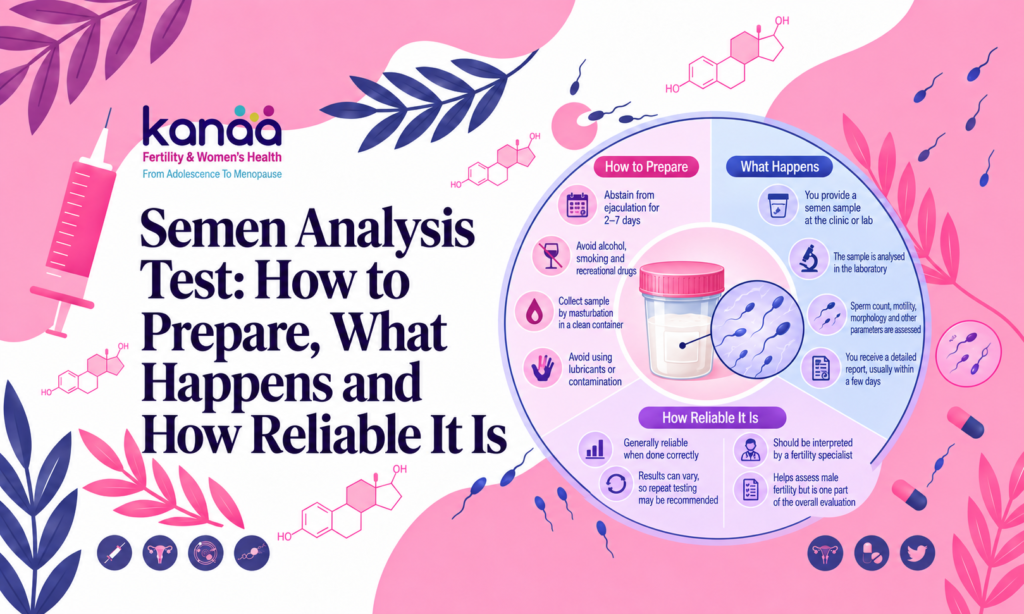
When a couple has been trying to conceive, much of the early attention often goes to the woman. Yet male factors contribute to a large share of couples’ difficulties, and in many cases a male factor exists alongside a female one. That is why a semen analysis is one of the first tests a fertility specialist usually recommends.
Many men feel uneasy about the test. It can feel personal, and it is natural to worry about the result. This guide explains, step by step, how to prepare, what happens on the day, what the laboratory measures and how reliable one result is. Knowing what to expect makes the process simpler and helps you get an accurate result the first time.
Key takeaways: A semen analysis is a simple, painless lab test of a semen sample. Following the abstinence window and collection instructions matters for accuracy. Results naturally vary from sample to sample, so an abnormal result is usually confirmed with a repeat test. One test is a starting point, not a final diagnosis.
What Is a Semen Analysis Test?
A semen analysis is a laboratory test that checks the amount and quality of a man’s semen and sperm. It measures how many sperm are present, how well they move and what they look like, along with the volume and other features of the semen. It is the main first test of male fertility.
The test is non-invasive. You provide a sample, usually by masturbation into a sterile container, and a trained lab team examines it, often under a microscope and sometimes with computer-assisted equipment.
Who Should Have a Semen Analysis, and When?
A semen analysis is recommended for the male partner of any couple being assessed for fertility. Ideally, it is done early, at the same time as the woman’s first tests, rather than after months of tests on her alone.
A doctor may suggest it sooner if a man has:
- A history of undescended testes, testicular injury or surgery in the groin
- Mumps affecting the testes after puberty
- Previous cancer treatment
- Erection or ejaculation difficulties
- A varicocele (enlarged veins in the scrotum) or other known conditions
Testing both partners together saves time and avoids missing an important factor. Kanaa Fertility offers fertility testing for couples so that both partners’ results are reviewed side by side.
How to Prepare for a Semen Analysis
Good preparation is the easiest way to get an accurate semen analysis. Most of it comes down to timing, avoiding a few things that can affect the sample, and following your clinic’s instructions exactly.
The abstinence window
You will usually be asked not to ejaculate for a short period before the test, typically a few days. The World Health Organization laboratory manual suggests an abstinence period of 2 to 7 days. Too short a gap can lower the sperm count; too long a gap can affect how well the sperm move.
Try to keep the same abstinence period if you are asked to repeat the test, so the two results can be compared fairly.
Recent fever, illness and medicines
Sperm take roughly two to three months to develop. A high fever or significant illness during that time can temporarily lower sperm count and movement, even after you feel well again. If you have had a fever in the past few months, tell the lab or your doctor. They may suggest waiting before testing or interpreting the result with this in mind.
Also tell your doctor about any medicines, supplements, or bodybuilding products you take. Testosterone and anabolic steroids, in particular, can greatly reduce sperm production. Do not stop a prescribed medicine without speaking to your doctor first.
Alcohol, smoking, heat and lifestyle
Heavy alcohol intake, smoking, regular use of saunas or hot tubs, and keeping a laptop on your lap for long periods can all affect sperm. You do not need to change your whole lifestyle before one test, but avoiding heavy drinking and heat exposure in the days before is sensible. For lasting improvement, changes need a few months to show, because of the sperm development cycle.
What not to use during collection
Lubricants, saliva, oils and ordinary condoms can damage sperm or affect the result. Avoid them completely. If collection by masturbation is difficult for personal or religious reasons, ask your clinic about special non-toxic collection condoms.
Your preparation checklist
- Confirm your appointment time and the abstinence window with the clinic
- Keep to the abstinence period, neither shorter nor much longer
- Avoid heavy alcohol and heat exposure in the days before
- Note any fever, illness or medicines in the past three months to tell the lab
- Pass urine and wash your hands and genitals before collection
- Use only the sterile container given by the lab
- Collect the whole sample; the first part contains many of the sperm
How the Sample Is Collected
Most semen samples are collected by masturbation into a sterile container at the clinic. Some clinics allow collection at home if the sample reaches the lab quickly and is kept at body temperature.
Collection at the clinic
Collecting at the clinic is preferred because the lab can start testing within the recommended time. You will be shown to a private room. Take your time. Label the container as instructed and hand it to the lab staff as directed.
Collection at home
If you find it hard to collect at the clinic, ask whether home collection is possible. Laboratory guidelines generally recommend that the sample reaches the lab within about an hour and is kept close to body temperature, for example in an inside pocket.
If any part of the sample is spilled, tell the lab. A missing portion can give a falsely low result.
Privacy and comfort
Feeling awkward is completely normal. Fertility clinic teams handle these tests every day and treat every patient with discretion. If you have concerns about privacy or the collection room, ask in advance.
What the Lab Checks
The lab checks the semen’s volume, sperm concentration and total count, sperm movement, sperm shape and a few other features. Together, these give a picture of sperm production and function.
| What is measured | What it means in simple words |
|---|---|
| Semen volume | How much fluid is ejaculated |
| Sperm concentration | How many sperm are in each millilitre |
| Total sperm count | The total number of sperm in the whole sample |
| Motility | The share of sperm that are moving, and how well they swim forward |
| Morphology | The share of sperm with a normal shape |
| Vitality | The share of sperm that are alive, checked when motility is low |
| pH and liquefaction | Whether the semen has a normal acidity and thins out normally after ejaculation |
| White blood cells | Whether there are signs that may suggest infection or inflammation |
This guide focuses on the test itself. To understand your numbers once you have them, read how to read a semen analysis report.
How Reliable Is a Semen Analysis?
A semen analysis is a reliable first test when it is done in a well-run laboratory using standard methods. However, sperm counts and quality naturally vary from one sample to the next, so an abnormal result is usually repeated before any conclusion is drawn.
Why results vary between samples
The same man can produce quite different results a few weeks apart. Recent illness, stress, the abstinence period, a missed part of the sample or delays in getting the sample to the lab can all make a difference. This natural variation is why one result should never be treated as final.
Why a repeat test is often advised
If the first result is outside the reference range, doctors commonly ask for a second test after a few weeks. Two results together give a much clearer picture. If both are normal, male factor is less likely to be the main issue. If both show the same problem, your doctor can plan further tests.
Signs of a well-run andrology lab
Accuracy depends a great deal on the laboratory. A good lab will:
- Follow standard methods, such as those in the WHO laboratory manual for the examination of human semen
- Have trained staff who examine semen samples regularly
- Run internal quality control and, ideally, take part in external quality assessment
- Give clear collection instructions and record the abstinence period and collection time
- Provide a report with reference values and a doctor to explain it
Choosing a Lab for Semen Analysis in Chennai: Questions to Ask
If you are choosing where to do your semen analysis in Chennai or elsewhere in Tamil Nadu, these questions can help:
- Is the test done in a dedicated andrology or fertility lab?
- Which method or standard does the lab follow?
- Is there a private collection room on site?
- How soon is the sample examined after collection?
- Will a fertility specialist explain the report, or will I only receive a printout?
- Can further tests, such as sperm DNA fragmentation, be arranged if needed?
A fertility clinic lab has the advantage that your results feed directly into your treatment plan. At Kanaa Fertility, the male fertility check is reviewed together with your partner’s results.
What Happens After Your Results?
What happens next depends on your results and your partner’s. If your semen analysis is normal, your doctor will focus on other factors. If it shows a change, several next steps are possible:
- A repeat semen analysis to confirm the finding
- Hormone blood tests, such as FSH, LH and testosterone, to check sperm production signals
- A sperm DNA fragmentation test in some situations. Learn more about sperm DNA fragmentation
- A scrotal ultrasound or a review by a urologist or andrologist
- Genetic tests when the count is very low or no sperm is found. See our guide to treatment options for azoospermia
Treatment ranges from lifestyle changes and medical treatment to assisted reproduction. When sperm numbers or movement are very low, a technique such as ICSI treatment may be recommended. For the wider picture, read our guide to the causes and treatment of male infertility.
The Emotional Side for Men
Men often keep fertility worries to themselves. An unexpected result can bring feelings of shock, guilt or embarrassment. These feelings are common and valid. A semen analysis result says nothing about your worth as a partner, and many causes of low sperm quality are treatable or can be worked around with modern treatment.
Talking openly with your partner, and asking your doctor every question you have, helps. Fertility is a shared journey, and the result is information for both of you to plan with.
Other Tests You May Hear About
Depending on your semen analysis, your doctor may mention a few additional tests. You do not need all of them, but it helps to know what they are:
- Post-ejaculation urine test: if the semen volume is very low, a urine sample after ejaculation checks whether semen is flowing backwards into the bladder (retrograde ejaculation).
- Antisperm antibody test: checks whether the immune system is affecting sperm, sometimes considered when sperm clump together.
- Semen culture: looks for infection if white blood cells are raised or symptoms suggest it.
- Sperm DNA fragmentation test: measures damage to the genetic material inside sperm, sometimes considered after repeated miscarriage or failed treatment.
Your doctor will explain whether any of these are useful in your case, and why.
Conclusion
A semen analysis is simple, painless and one of the most useful tests in fertility care. Preparing properly, following the abstinence window, avoiding lubricants and getting the sample to the lab on time give you the most accurate result. Remember that results vary, so one abnormal test is a reason to look further, not a final answer.
Kanaa Fertility offers semen analysis in a private, respectful setting at our KK Nagar and Mylapore clinics in Chennai, with results explained by a fertility specialist. Book a male fertility check or ask about testing for both partners together.
Frequently Asked Questions
How many days of abstinence are needed before a semen analysis?
Most labs ask for a short abstinence period, and the WHO manual suggests 2 to 7 days. A gap that is too short or too long can affect the result, so follow the exact window your clinic gives you.
Can I do the test if I had a fever recently?
Tell the lab or your doctor. A fever in the past few months can temporarily lower sperm count and movement, so your doctor may suggest waiting or will take it into account.
Is one semen analysis enough?
Not always. Sperm counts vary naturally from sample to sample, so an abnormal result is usually confirmed with a repeat test a few weeks later.
How long does it take to get semen analysis results?
Many clinics share results within a day or two. Ask your clinic for its timeline and whether a doctor will explain the report.
Does a normal semen analysis mean I am fertile?
It is a good sign, but it does not measure everything, such as sperm DNA quality. Your doctor looks at both partners’ results together before drawing conclusions.
Can lifestyle changes improve my semen analysis?
Stopping smoking, reducing alcohol, avoiding heat and staying active may help some men. Sperm take around two to three months to develop, so changes take time to show.
Can I collect the semen sample at home?
Some clinics allow it if the sample reaches the lab within about an hour and is kept at body temperature. Check your clinic’s rules first, as collection at the clinic is usually preferred.