
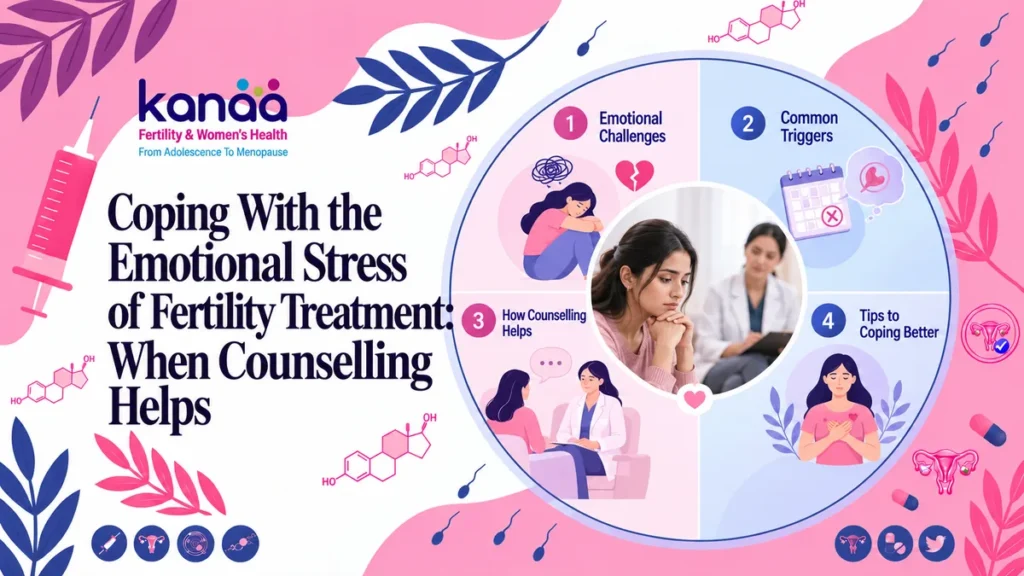
Trying to conceive can bring hope, worry and exhaustion all at once. Tests, waiting, treatment decisions and questions from family can take a real emotional toll. If you feel anxious, low or distant from your partner, you are not alone, and you are not doing anything wrong.
This guide explains why fertility treatment can feel so hard, what fertility counselling is, and simple ways couples can support each other. It is not a replacement for medical or mental health care, but it may help you understand what you are feeling.

Why fertility treatment can feel emotionally hard
Fertility treatment involves uncertainty, repeated waiting and important decisions, often while life carries on as usual. Many people feel stress, sadness, guilt or anger at some point. These feelings are a normal response to a difficult experience. Support from a fertility counsellor, a partner and trusted people can make the journey easier to manage.
People sometimes wonder whether stress causes infertility. Current evidence does not show that ordinary stress is a main cause of infertility, so please do not blame yourself. Looking after your emotional health still matters, because it helps you cope and make decisions clearly.
Common feelings at each stage
| Stage | What many people feel |
|---|---|
| Trying to conceive | Hope each month, then disappointment and self-doubt |
| Diagnosis | Shock, relief at having an answer, or worry about the future |
| Starting treatment | Pressure, information overload, concern about cost and time |
| During a cycle | Anxiety about injections, scans and results |
| The wait after transfer or IUI | Restlessness, checking every symptom, difficulty concentrating |
| A negative result or loss | Grief, anger, feeling alone, questioning next steps |
| A positive result | Joy mixed with fear, especially after past disappointments |
What is fertility counselling?
Fertility counselling is a confidential conversation with a trained counsellor who understands fertility treatment. It gives individuals and couples a safe space to talk about feelings, manage stress, make treatment decisions and cope with results. It is offered before, during and after treatment, and it does not mean something is wrong with you.
Fertility counselling is different from preconception counselling, which is a medical check before pregnancy.
How counselling can help
- Understanding and naming your emotions
- Improving communication between partners
- Thinking through decisions such as donor programmes, surrogacy or stopping treatment
- Coping with a negative result, pregnancy loss or a long wait
- Handling questions and expectations from family
Counselling for donor and surrogacy treatments
When treatment involves donor eggs, donor sperm or surrogacy, counselling helps couples understand the emotional, family and legal aspects. In India, counselling is an important part of these treatments under current regulations.
Support for partners and for men
Men often feel they must stay strong and may keep their feelings to themselves. A male factor diagnosis can bring unexpected feelings of guilt or loss. Partners may also cope in different ways: one may want to talk, while the other needs quiet. Both are normal. Counselling can help you understand each other’s way of coping.
Practical ways to cope during a cycle
- Share the load. Divide tasks such as appointments, medicine schedules and reminders.
- Choose who to tell. It is fine to keep treatment private or to tell only a few trusted people.
- Keep some normal routines. Short walks, regular meals and good sleep help many people feel steadier.
- Limit symptom searching. Reading every online forum during the wait can increase anxiety.
- Plan something for result day. Decide in advance how you will hear the result and spend the day.
- Ask questions. Write questions down before appointments. Clear information can reduce worry.
Handling family and social pressure
In many Indian families, questions about pregnancy come early and often. You can prepare a short, polite reply, such as “We will share news when we are ready.” Agree as a couple on what you want to share. A counsellor can help you plan these conversations.
When to seek extra help
Talk to your doctor or a mental health professional if you notice:
- Feeling low or hopeless most days for two weeks or more
- Losing interest in things you usually enjoy
- Trouble sleeping or eating that does not improve
- Anxiety that stops you from working or carrying on daily life
- Using alcohol or other substances to cope
If you ever have thoughts of harming yourself, please contact a doctor or a local emergency service, or reach out to someone you trust right away.
Support at Kanaa Fertility
At Kanaa Fertility, we believe emotional care is part of fertility care. Our team takes time to explain each step, answer questions and connect you with counselling support when you need it.
Key points
- Strong emotions during fertility treatment are normal.
- Ordinary stress is not shown to be a main cause of infertility, so do not blame yourself.
- Fertility counselling is confidential support for decisions, stress and results.
- Partners may cope differently, and both ways are valid.
- Seek extra help if low mood or anxiety lasts or affects daily life.
Talk to our team
If you are finding the journey hard, you do not have to manage it alone. Speak with the team at Kanaa Fertility in KK Nagar and Mylapore, Chennai, about your treatment and the support available to you.
Frequently Asked Questions
Is it normal to feel anxious during IVF?
Yes. Anxiety during IVF is very common because of the uncertainty, waiting and decisions involved. Talking about it and getting support can help.
What does a fertility counsellor do?
A fertility counsellor offers confidential support to help you manage stress, make treatment decisions, improve communication as a couple and cope with results.
Does stress cause infertility?
Current evidence does not show that ordinary stress is a main cause of infertility. Looking after your emotional health still helps you cope with treatment.
Is fertility counselling only for couples having problems?
No. Counselling is helpful for anyone going through fertility treatment, including before treatment starts, during a cycle and after results.
How can I support my partner during fertility treatment?
Listen without trying to fix everything, share tasks, attend appointments together when possible, and accept that you may cope in different ways.
Is counselling needed for donor or surrogacy treatment?
Counselling is an important part of donor and surrogacy treatment. It helps couples understand the emotional, family and legal aspects before they begin.