24/7 Support

We are always open at KK Nagar

LASER ASSISTED HATCHING · KANAA FERTILITY

Laser Assisted Hatching

A precise embryology technique that helps your embryo "hatch" and implant, when its outer shell may otherwise make that harder. Available as part of your IVF or ICSI cycle at our KK Nagar and Mylapore clinics in Chennai.

Book Your Consultation

Talk to a Kanaa fertility specialist. We will call you back.

Request a Callback

Your enquiry is private and handled with care by our medical team.

Lab Technique
Type of Procedure
3
Hatching Methods Available
On request
Added Cost

Laser assisted hatching at Kanaa Fertility is a precise embryology technique that helps your embryo "hatch" out of its outer shell, when this process might not happen on its own — improving its chance of implanting. Two clinics in KK Nagar & Mylapore, with in-person & online consultations.

WHAT IS LASER ASSISTED HATCHING

Helping Your Embryo Hatch and Implant

A precision embryology technique used during your IVF or ICSI cycle.

After the egg is fertilised and forms an embryo, the normal process of implantation involves the embryo "hatching" — breaking out of its outer shell and attaching to the lining of the uterus, then growing for pregnancy to occur. But this doesn't always happen on its own, even when a healthy embryo is placed in the uterine cavity.

One reason for failed implantation is the embryo's failure to hatch out of its thick outer wall — this is where assisted hatching is designed to help.

Precision Technique

A small hole is created in the embryo's outer wall using laser, one of three hatching methods available.

Done in the Lab

This is an embryology step, not a procedure performed on you directly.

One Piece of a Bigger Picture

Used as part of your IVF or ICSI cycle, not on its own.

HOW IT WORKS

How Laser Assisted Hatching Works

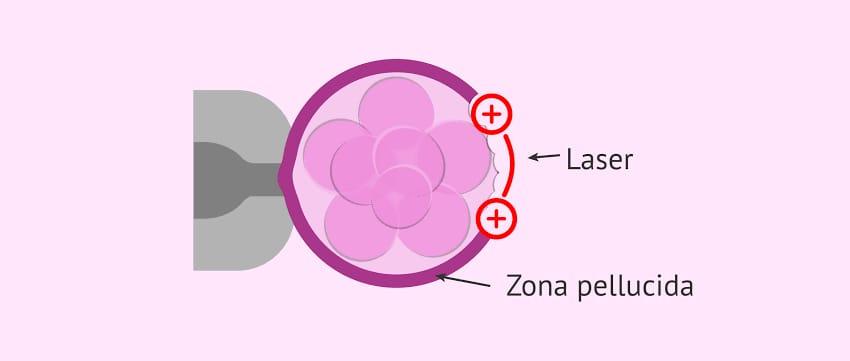
A method whereby a small hole is drilled in the outer wall of the embryo using laser, to help it hatch out and implant in the endometrial lining of the uterus.

1
Embryo Selection
Your embryologist identifies embryos that may benefit from assisted hatching.
2
Laser Application
A precise laser creates a small opening in the zona pellucida (the embryo's outer shell).
3
Embryo Transfer
The embryo is then transferred as part of your treatment cycle, with an easier path to hatching and implanting.

There are three main methods of assisted hatching: mechanical hatching, chemical hatching, and laser-assisted hatching.
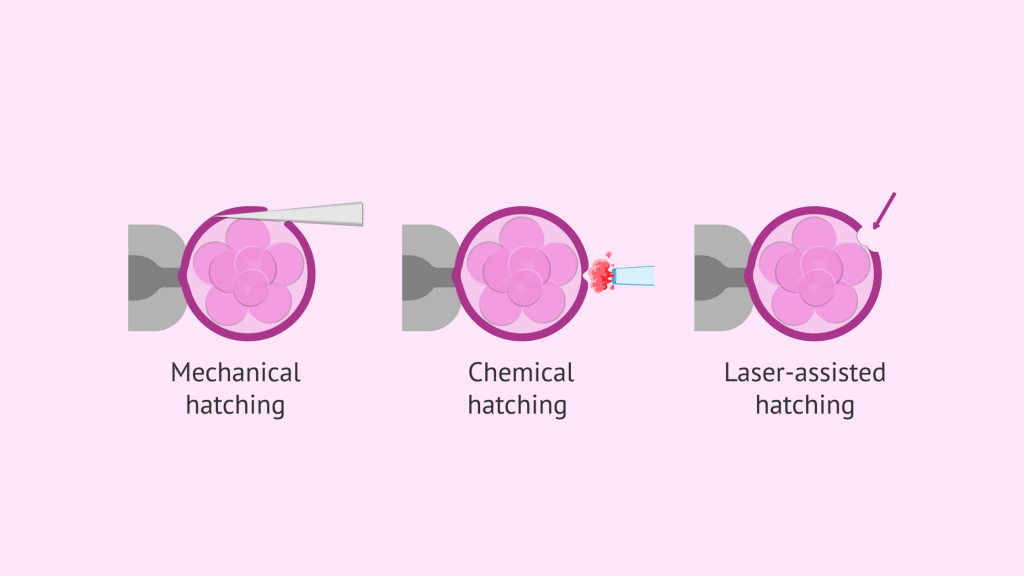

Three hatching methods: mechanical, chemical, and laser-assisted
WHAT'S INVOLVED

What's Involved

Laser assisted hatching is performed in the embryology lab as part of your IVF or ICSI cycle — it's not a separate visit. Added cost, if applicable, to be confirmed by the clinic.

RISKS & WHAT TO EXPECT

Risks & What to Expect

As with any embryology technique, there are a few things worth knowing honestly:

  • Small Risk of Damage to the Embryo — There's a small risk of harm to the embryo when the hole is drilled.
  • Interference With Natural Hatching — This may interfere with the embryo's natural hatching process, which could affect success in some cases.
  • Slightly Higher Chance of Twinning — Particularly identical (monozygotic) twinning.

Your embryologist only recommends this technique when they believe the potential benefit outweighs these small risks for your specific embryos.

ALTERNATIVES

Alternatives to Laser Assisted Hatching

There are two other hatching methods — mechanical hatching and chemical hatching — which your embryologist may use instead, depending on your situation.

Your embryology team will explain which method, if any, is right for your embryos.

FAQs

·        Small risk of lethal damage to the embryo when drilling a hole

·        Interference with the natural hatching process of the embryo which may adversely impact success

·        Small increase in the rate of twinning especially monozygotic twinning

At present, assisted hatching is considered in a small subset of patients rather than being offered to all. And these are those who fall in the below categories;

1. Those who have had more than two failed IVF cycles with no specific reason

2. Those with poor quality embryos

3. Age of the woman more than 38 years

Though a Cochrane review in 2012 reported slightly increased clinical pregnancy rates in favour of assisted hatching, it was not taken as the dictum since they did not look at live birth rates.

With no proper evidence showing that it definitely benefits pregnancy rates, most international guidelines at present are against offering it in most cases.

You can discuss your specific case situation with the doctor, consider the additional costs and arrive at a decision.